The Silent Guardians: How Labs Ensure Vaccine Safety Across Africa
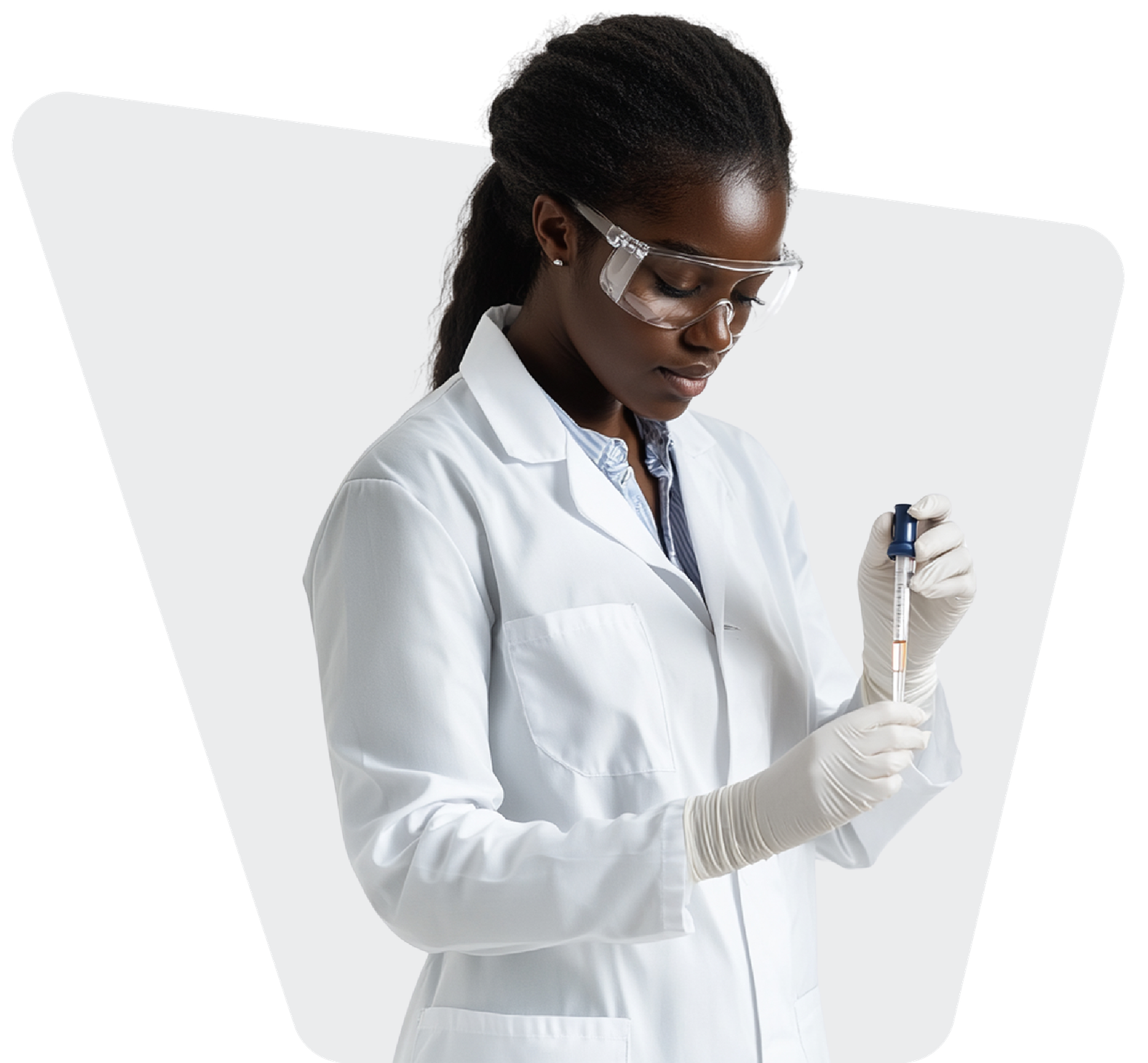
Over the past decades, vaccines have become one of the most powerful tools for public health — especially on the African continent. But behind every safe injection, every immunised child or adult, there is a critical network of laboratories working quietly and diligently to protect lives. This network not only ensures that vaccines are effective but also that they are safe, reliable, and trusted.

Why Labs Matter for Vaccine Safety
When a vaccine is rolled out, we often hear about clinical trials, regulatory approvals and government programmes. What gets less attention is the lab-backed infrastructure that supports quality control, lot-release, safety monitoring and surveillance. Without robust laboratory capacity, vaccines could be compromised in quality, storage, transport or monitoring — and that’s a risk for public health and trust.
For example, in one recent study in Nigeria, the national regulator’s laboratory (the National Agency for Food and Drug Administration and Control (NAFDAC)’s Vaccine & Other Biologicals Lab) tested imported COVID-19 vaccine lots to ensure storage conditions, quality profiles and lot-release standards before distribution. SpringerLink This highlights the critical role labs play not only in development, but in the life-cycle of vaccines in Africa.
Challenges in the African Context
Despite the importance of these labs, numerous challenges remain on the continent:
- Many African countries still have weak pharmacovigilance and post-market surveillance systems — meaning adverse events following immunisation (AEFI) may go under-detected. immunologyresearchjournal.com+2PMC+2
- Clinical trial data derived from African populations is often limited: one review noted that although Africa hosts ~18% of the world’s population, it had less than 2.5% of global clinical trials. MDPI
- Laboratories may lack standardised reagents, harmonised assays, timely sample processing, or the infrastructure for cold-chain monitoring, all of which jeopardise quality assurance. For example, the network of labs supported by the Coalition for Epidemic Preparedness Innovations (CEPI) emphasised that adding African labs reduced sample-shipping times and improved turnaround. cepi.net
Understanding these constraints helps frame why strengthening labs is not a luxury, but an imperative.
What Laboratories Do: Pillars of Vaccine Safety
Here are key functions of laboratories in the vaccine ecosystem:
1. Quality Control & Lot Release
Before any vaccine batch reaches people, labs test it for potency, sterility, purity, and correct storage conditions. In the Nigerian example above, the regulator’s lab followed ISO-certified processes before releasing lots. SpringerLink
Labs monitor cold-chain integrity, inspect vials for damage or expiry, verify documentation and ensure that the vaccine meets every specification.
2. Surveillance & Adverse Event Monitoring
Once vaccines are in use, labs help monitor safety by analysing data on adverse events, investigating signal-detection, and verifying whether events are vaccine-related or coincidental. A review on African vaccine safety states that countries often lacked expert committees, guidelines and trained staff for AEFI response. immunologyresearchjournal.com
Effective lab-supported pharmacovigilance builds public confidence in immunisation programmes.
3. Research & Harmonisation of Methods
Labs engage in vaccine-related research: developing immunological assays, molecular characterisation, genomics and vaccine-candidate evaluation. For instance, a document on vaccine-research capability underlines the role of genomics in improving immunisation strategies. kirct.com
Moreover, harmonised methods across labs – such as those in CEPI’s Centralised Laboratory Network – reduce variability and accelerate development. cepi.net
Building Stronger Laboratory Systems in Africa
To maximise the role of labs in vaccine safety across the continent, several strategic priorities emerge:
- Investment in infrastructure & accreditation: Labs must adhere to international standards (e.g., ISO 17025, Good Laboratory Practices) to ensure trusted results.
- Workforce development: Skilled analysts, technicians and quality-assurance personnel are vital to sustaining lab operations and surveillance.
- Regional coordination & data-sharing: Collaborative frameworks that link national labs, regulatory agencies and immunisation programmes improve speed and reduce duplication. For example, the meeting of the African Advisory Committee on Vaccine Safety (AACVS) emphasised need for real-time data and harmonised frameworks. MDPI
- Sustainability & funding: Many lab programmes are donor-driven or project-specific; embedding vaccine-safety labs into routine national health strategy is key.
- Community trust & communication: Labs provide the assurance behind immunisation campaigns. When adverse events are rare and handled transparently, trust is maintained.
Why This Matters for Africa’s Future
Vaccines are a cornerstone of health and economic development in Africa: they prevent diseases, reduce healthcare burdens and support productivity. Safe vaccines underpin the success of mass immunisation programmes, outbreak responses and routine public-health work. When labs function well, they help ensure that neither poor quality nor mistrust derail progress.
Consider the growing threat of emerging infections and pandemics. A strong continental lab network means that Africa can not only respond swiftly, but contribute to global vaccine evaluation and standard-setting. The expansion of CEPI’s lab network into African partner facilities is a signal of this shift. cepi.net
Conclusion
In the story of vaccine-driven public health across Africa, laboratories are the unsung heroes. They underpin every step of the process — from ensuring that a batch meets specifications, to monitoring it in real-world use, to researching next-generation vaccines. Strengthening lab systems means safer vaccines, stronger immunisation programmes and healthier communities.
For policy-makers, funders, scientists and health-care leaders, the takeaway is clear: investment in laboratory capacity is not optional — it is foundational. As Africa confronts both endemic diseases and the risk of future pandemics, the role of labs in enabling trust, quality and safety will only grow more central.
By reinforcing laboratories today, Africa builds the resilient health-systems of tomorow.
To Run Analysis, visit https://analysis.africa NOW!